Marketing
Turn campaign data, event learnings, and brand expertise into on-demand intelligence, and scale content without losing consistency.
How do Marketing teams use Digital Twin?
Marketing teams use Digital Twin to answer campaign, event, and pipeline questions that span CRM, marketing automation, Slack, and shared drives. Instead of stitching together spreadsheets and channel threads, marketers ask in plain language and get synthesized answers grounded in connected data sources.
| Use case | Task to tackle |
|---|---|
| Campaign intelligence on demand | Compare pipeline, conversion, and campaign performance across channels and time periods |
| Capture & scale marketing expertise | Turn post-event debriefs, vendor evaluations, and campaign strategy into reusable playbooks |
| Marketing operating cadence | Automate campaign pulse, week-in-review, and business review drafts on a schedule |
| Content localization & brand consistency | Adapt content across languages and channels while maintaining brand voice |
Tutorial & Guides
1. Campaign Intelligence on Demand
Combine structured data from your CRM and marketing automation with conversational context from Slack, email, and meeting debriefs.
How teams put this to work
Ask across the stack. Pose a single question and the Twin pulls from pipeline data, engagement metrics, and the Slack and meeting context that explains the numbers.
Get the why, not just the what. When a campaign underperforms, have the Twin cross-reference debrief notes and feedback so you understand the cause, not just the result.
Example prompts:
Compare pipeline from our last 3 ABM campaigns. Which converted best from MQL to opportunity, and why?
Which accounts from last month's webinar series haven't been contacted by an AE yet?
Why did the [campaign name] campaign underperform? Check Slack feedback, the debrief meeting, and engagement data.
Show me pipeline by campaign, account tier, and AE for this quarter.
2. Capture & Scale Marketing Expertise
Turn tacit marketing judgment into structured, shareable knowledge so the whole team benefits from your best event producers, demand gen leads, and content strategists.
How teams put this to work
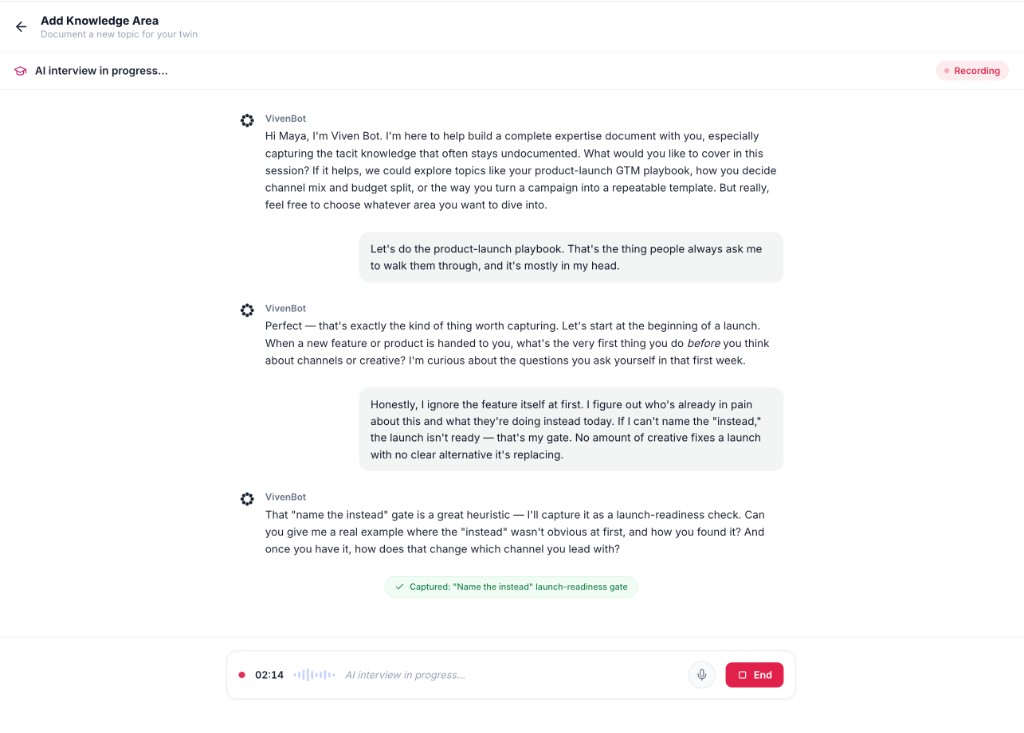
Interview the expertise out. Use Interview Me in Train Now to run a post-event or campaign debrief; it extracts judgment, exceptions, and learnings into a structured playbook you can share.
Build a Marketing Expert Twin. Stand up an Expert Twin backed by your event and demand gen leads so anyone planning similar work gets proven formats, vendors, and follow-up approaches.
Example prompts:
Interview me about [event name]: format, attendee quality, vendor performance, follow-up results, and what I'd change.
I'm planning an executive dinner in [city]. Based on what we know, what format, vendors, and follow-up should I use?
3. Marketing Operating Cadence
Keep the team starting each week with context instead of a blank dashboard.
How teams put this to work
Standardize the pulse. Define what a weekly pulse or monthly review should cover once, so every recurring report is consistent and comparable.
Deliver where the team works. Route the digest to your marketing Slack channel so it's visible without anyone opening another tool.
A Monday campaign pulse and a monthly business review draft are common scheduled Agents: they pull pipeline by source, flag underperforming campaigns, and post a ranked digest on a cadence. See Creating Scheduled Tasks.
Example prompts:
Draft this week's campaign pulse: pipeline by source, campaigns underperforming by more than 20%, and open follow-ups not yet actioned.
Prepare a monthly business review narrative: pipeline vs. target, top campaigns, event ROI, and 3 focus recommendations.
4. Content Localization & Brand Consistency
Scale content production while keeping brand voice consistent across teams, languages, and channels.
How teams put this to work
Ground content in your brand. Keep brand guidelines and approved messaging in your Library so drafts and adaptations stay on-voice.
Draft where you work. Use Digital Twin in Claude or ChatGPT so organizational context is embedded while you write, and artifacts stay factually grounded in your positioning.
Example prompts:
Adapt this blog post for the [region] market while maintaining our brand voice.
Review this draft against our brand guidelines and flag anything off-tone.
Turn this product brief into social posts for LinkedIn and X.
Step-by-step guides for these workflows are on the way.